Weight Loss
Tirzepatide
A dual GIP and GLP-1 receptor agonist that acts on two hormone pathways involved in appetite and metabolic regulation, evaluated by a licensed clinician for each individual.
Start Your EvaluationAbout tirzepatide
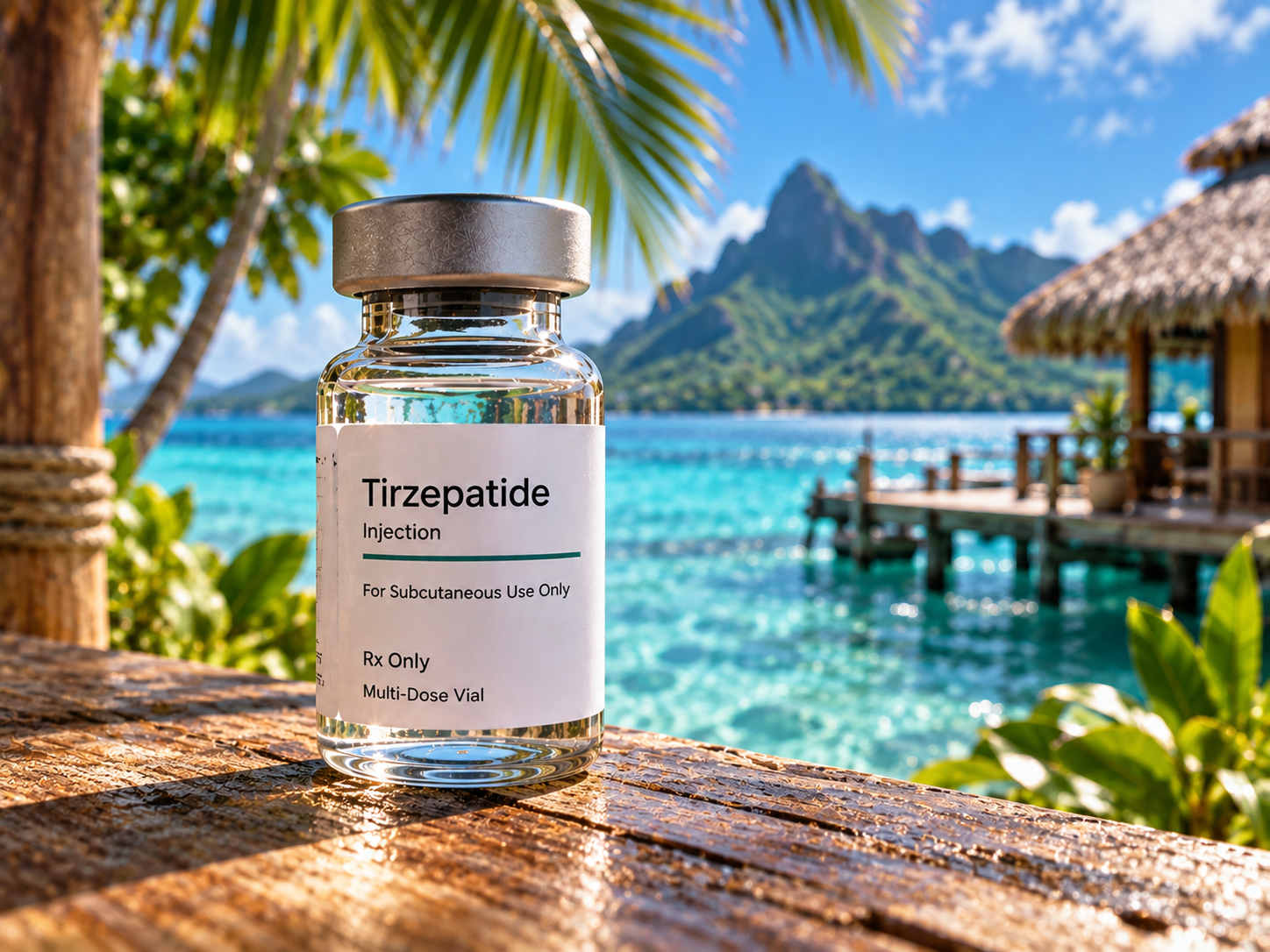
Tirzepatide works on two hormone pathways involved in appetite, digestion, and metabolic regulation. By engaging both, it may support reduced appetite and improved metabolic health when paired with nutrition and activity. Any use is prescription only: a licensed clinician reviews your health history, current medications, and goals before deciding whether tirzepatide is medically appropriate for you, and any medication is dispensed by a licensed U.S. pharmacy.
- Medical history review
- Individual treatment decision — not a one-size-fits-all plan
- Dispensed and shipped by a licensed U.S. pharmacy
- Follow-up as clinically indicated
How it works
Tirzepatide mimics two natural hormones your body releases after eating, instead of just one:
GLP-1
The same hormone semaglutide mimics. It reduces hunger, helps you feel full sooner, slows how fast your stomach empties, and helps control blood sugar.
GIP
A second “fullness” hormone. It also helps with insulin release and appears to strengthen the appetite-reducing effect and improve how the body handles fat and sugar.
Both hormones at once
Hitting both pathways at the same time seems to make the overall effect stronger, so people eat less and feel satisfied with smaller amounts.
Clinical results
What it's been shown to do
In the main clinical trial, people without diabetes who took tirzepatide for about 17 months, along with diet and exercise changes, lost an average of roughly 15% to 21% of their body weight, depending on the dose. At the highest dose, someone weighing 250 lbs might lose around 50 lbs on average. Results vary from person to person. Zepbound is also approved to treat moderate to severe obstructive sleep apnea in people with obesity.
15–21%
Average body weight lost
About 17 months in the main trial, depending on dose, alongside diet and exercise
Head to head
Tirzepatide vs. semaglutide
The key difference is that semaglutide acts on one hormone (GLP-1), while tirzepatide acts on two (GLP-1 and GIP). That dual action is the main reason tirzepatide tends to produce more weight loss.
This was tested directly in a head-to-head trial: over about 17 months, people on tirzepatide lost an average of about 20% of their body weight, compared with about 14% for semaglutide. For someone weighing 250 lbs, that's roughly 50 lbs versus 35 lbs. Tirzepatide also tends to improve blood sugar a bit more in people with diabetes.
~20%
Average weight loss on tirzepatide
~14%
Average weight loss on semaglutide
Is tirzepatide right for you?
Only a licensed clinician can determine eligibility. During your online evaluation, you will share your health history, goals, and current medications, and the clinician will consider factors such as your medical conditions, potential interactions, and contraindications. Tirzepatide is not appropriate for everyone, and the clinician's decision is final.
Important safety information: GIP and GLP-1 medications can cause side effects, including nausea, vomiting, diarrhea, and abdominal pain, and are not appropriate for everyone. Tell your clinician about all medical conditions and medications you take. Seek urgent care for severe symptoms. Compounded medications are not FDA-approved, and FDA does not verify the safety, effectiveness, or quality of compounded drugs.
Your next step