Weight Loss
Retatrutide
An investigational medication studied for its effects on three hormone pathways — GIP, GLP-1, and glucagon. A licensed clinician may consider it for an individualized treatment plan after a full medical review.
Start Your EvaluationAbout retatrutide
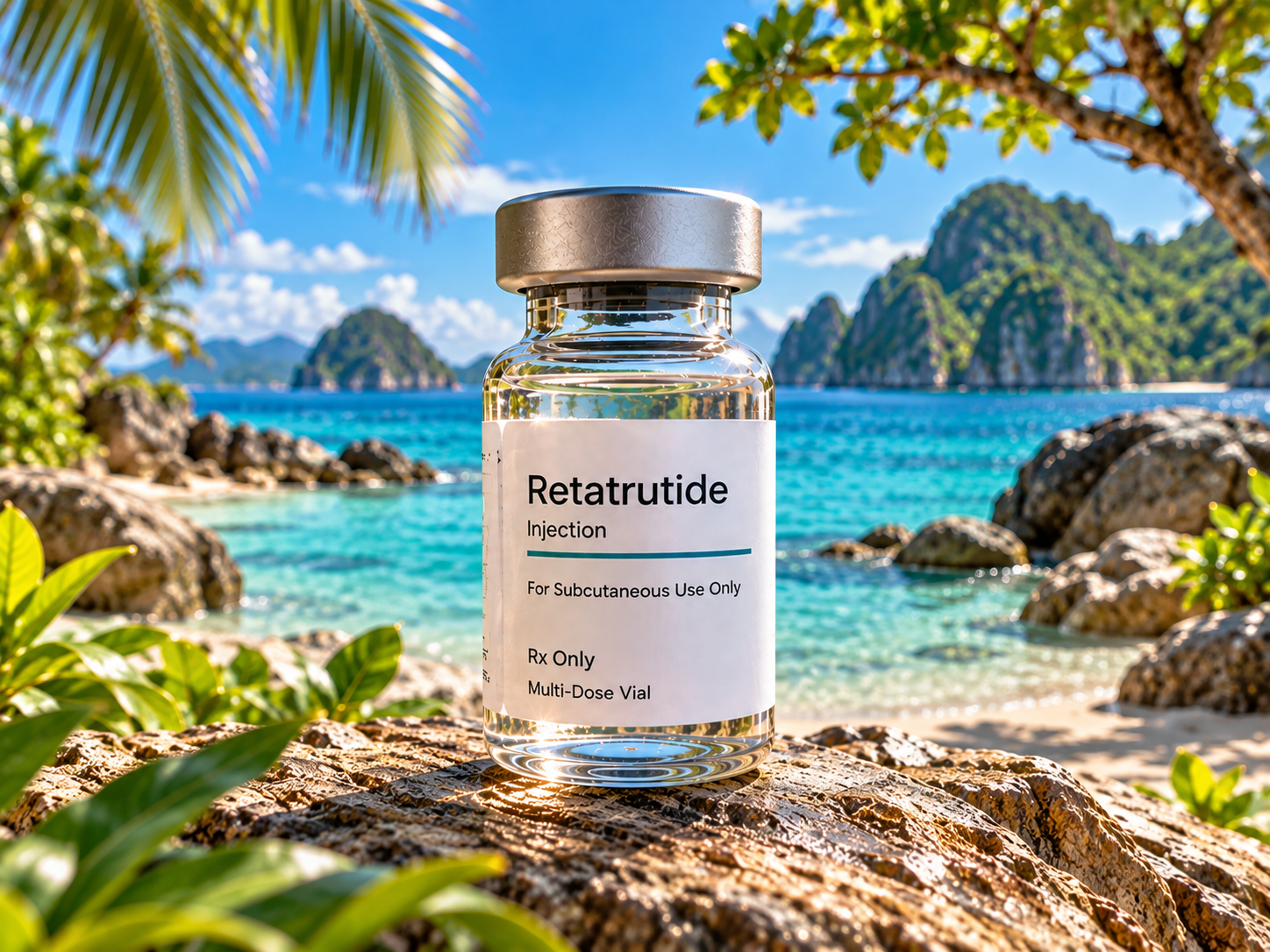
Retatrutide is an investigational medication studied for its activity on three hormone pathways involved in appetite and metabolic regulation. It is not FDA-approved, and FDA does not verify the safety, effectiveness, or quality of compounded retatrutide. A licensed clinician may determine it is appropriate for you as part of an individualized treatment plan after reviewing your health history, goals, and current medications, and any medication is dispensed by a licensed U.S. pharmacy.
- Thorough clinician review of your health history
- Individual treatment decision based on clinical judgment
- Dispensed and shipped by a licensed U.S. pharmacy
- Ongoing support throughout your treatment journey
How it works
Semaglutide copies one natural hormone and tirzepatide copies two. Retatrutide copies three, which is why it’s often called a “triple agonist”:
GLP-1
Reduces hunger, helps you feel full sooner, and slows how fast your stomach empties.
GIP
Strengthens the fullness effect and helps with blood sugar and fat handling.
Glucagon
The new piece. It boosts energy expenditure (calorie burning) and reduces liver fat, and no currently approved obesity drug targets this receptor.
So in simple terms, it works on both sides of the equation: you eat less, and your body may burn somewhat more.
Clinical results
What it's been shown to do
The results so far are the largest ever seen for a weight-loss drug. In the main phase 3 trial, TRIUMPH-1, at 80 weeks mean weight loss was 19.0% (47.2 lb) on the 4 mg dose, 25.9% (64.4 lb) on 9 mg, and 28.3% (70.3 lb) on 12 mg, versus 2.2% on placebo. About 45 percent of the high-dose group lost at least 30 percent of their starting weight. That level of loss is close to what's typically seen with weight-loss surgery.
28.3%
Mean weight loss at the highest dose
70.3 lb on 12 mg at 80 weeks in TRIUMPH-1, versus 2.2% on placebo
Head to head
How it compares to semaglutide and tirzepatide
The simplest way to think about it is as a ladder: semaglutide works on one hormone, tirzepatide on two, and retatrutide on three. Each step up has produced more weight loss on average: roughly 15% for semaglutide, around 20% for tirzepatide, and up to about 28% for retatrutide at its highest dose. The added glucagon effect is the main reason, since it may raise calorie burning and cut liver fat rather than only reducing appetite.
~15%
Average weight loss on semaglutide
~20%
Average weight loss on tirzepatide
~28%
Up to, on retatrutide at its highest dose
The tradeoffs are real, though. Semaglutide and tirzepatide are approved, available now, and have years of real-world safety data behind them, with semaglutide also proven to lower heart attack and stroke risk. Retatrutide isn't approved, hasn't been compared head-to-head against tirzepatide in a finished trial, and its strongest dose is also the hardest for some people to tolerate. For someone wanting to lose weight today, semaglutide or tirzepatide are the realistic options, and retatrutide is one to watch over the next year or two.
Is retatrutide right for you?
Only a licensed clinician can determine eligibility. During your online evaluation, you will share your health history, goals, and current medications, and the clinician will weigh the investigational nature of retatrutide alongside your medical conditions, potential interactions, and contraindications. Retatrutide is not appropriate for everyone, and the clinician's decision is final.
Important safety information: Retatrutide is investigational and not FDA-approved. Because it is a triple agonist, potential side effects may include nausea, vomiting, diarrhea, and abdominal pain, and it may not be appropriate for everyone. Tell your clinician about all medical conditions and medications you take. Seek urgent care for severe symptoms. FDA does not verify the safety, effectiveness, or quality of compounded drugs.
Your next step