Stimulate protein synthesis
LR3 stimulates protein synthesis in cultured L6 muscle cells — the process of assembling the proteins cells need to build and maintain tissue.
Direct LR3 cell-assay finding: Sigma scientific product documentation.
Wellness Peptides
A direct growth-factor signal. IGF-LR3 activates receptors involved in building proteins, muscle-cell development, and energy use — the biology behind interest in recovery and body composition.
Start Your EvaluationWhat it is
IGF-1 means insulin-like growth factor 1, a hormone produced mainly by the liver in response to growth hormone. It helps regulate tissue growth and maintenance by activating receptors on cells.
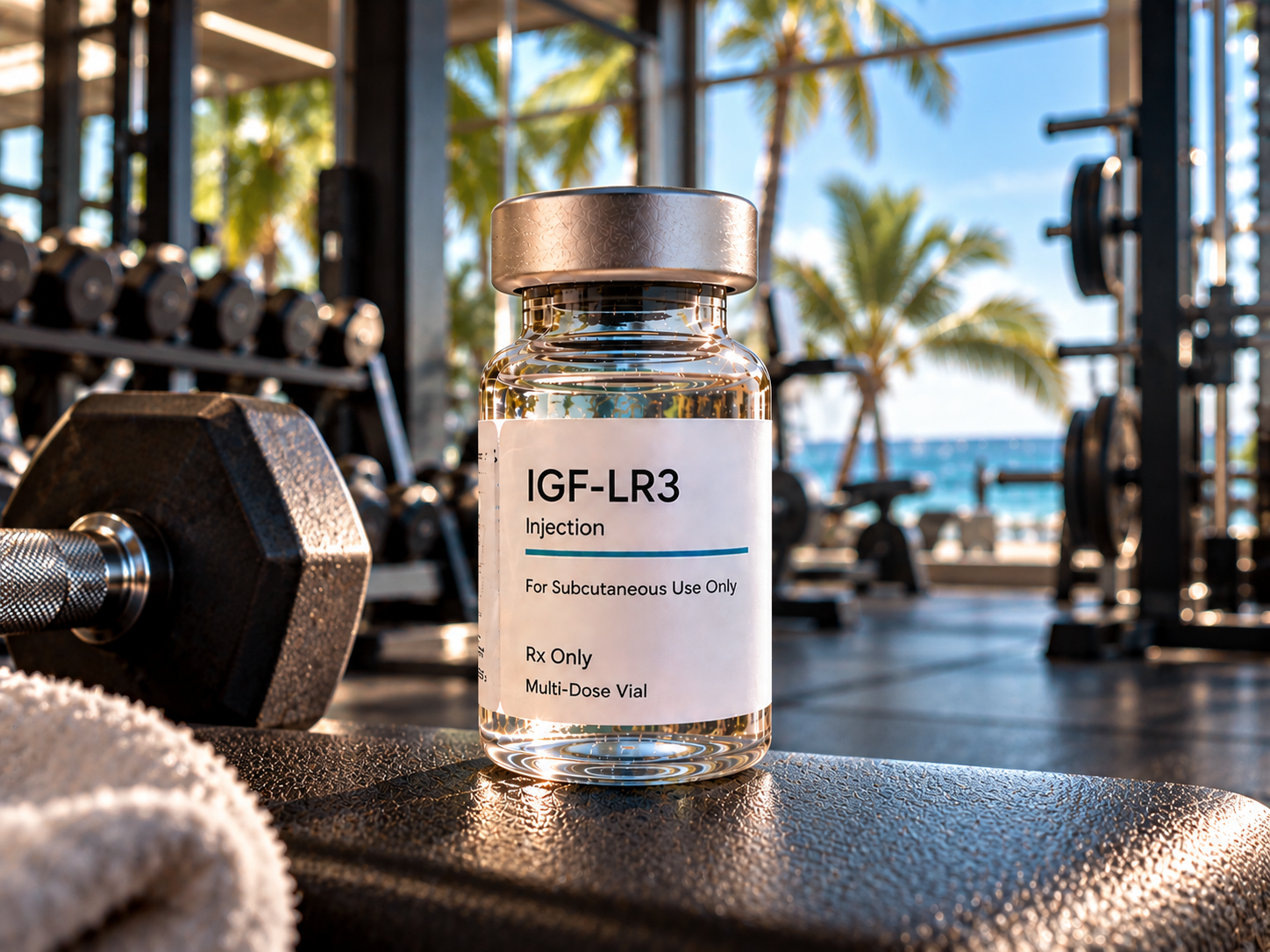
IGF-LR3 — Long R3 IGF-1 — is a modified, 83-amino-acid version of IGF-1. A 13-amino-acid extension and an arginine substitution at position three reduce its attachment to IGF-binding proteins, which normally help control IGF-1 availability.
How it works
IGF-1 receptors activate pathways including Akt and mTOR, which help regulate protein production and cell growth. LR3 has directly stimulated protein synthesis in cultured muscle cells.
IGF signaling influences how cells grow, develop, and use glucose. These actions explain the interest in muscle adaptation and tissue maintenance; LR3 has also lowered blood glucose in animal studies.
Potential benefits
The clearest findings come from cell experiments and animal studies. Here are the specific effects those studies measured — rather than promises of muscle gain or faster recovery in people.
LR3 stimulates protein synthesis in cultured L6 muscle cells — the process of assembling the proteins cells need to build and maintain tissue.
Direct LR3 cell-assay finding: Sigma scientific product documentation.
In cultured adult human skeletal muscle cells, Long R3 IGF-1 produced effects on differentiation similar to IGF-1, helping explain its connection to muscle-development research.
Human cells grown in a laboratory, not a treatment trial: Foulstone et al., 2003.
Rat experiments measured growth and anti-catabolic effects, including reversal of dexamethasone-associated muscle loss. Responses varied by tissue and experimental conditions.
Direct LR3 animal findings: Tomas et al., 1996; not a demonstrated human recovery benefit.
LR3 infusion lowered circulating glucose and amino-acid levels in a cattle study, showing that its effects extend beyond muscle-building signals to energy metabolism.
Direct LR3 animal finding: feed-restricted beef-heifer study, 1999; lower glucose is not proof of better diabetes control.
Monthly care
Start an online evaluation with an independent U.S.-licensed clinician to discuss your recovery and body-composition goals, health history, and medications. Review medically appropriate, available treatment options and monthly pricing before choosing a care plan — no membership fees. An evaluation does not guarantee access to IGF-LR3.
This page is educational and is not medical or legal advice. IGF-LR3 is not FDA-approved; human safety, effectiveness, dosing, and duration of action are not established. Cell and animal findings do not prove muscle gain, fat loss, faster healing, or anti-aging benefits in people, and results with natural IGF-1 or mecasermin cannot be assumed for LR3. Potential concerns include low blood sugar and excessive growth-factor activity. Discuss blood sugar conditions, cancer history, and all medications with your clinician. Do not self-dose; evaluation does not guarantee a prescription.
Sources: Tucson Wellness MD guide · LR3 structure & protein-synthesis assay · Human muscle-cell study · Rat growth & muscle study · Glucose-metabolism animal study · IGF-1 signaling pathways.