Tendons & ligaments
Animal studies have reported improved tendon and ligament healing, including better collagen organization and recovery of tissue strength after injury.
Preclinical findings—not proof of faster injury recovery in people.
Wellness Peptides
A synthetic 15-amino-acid peptide studied for its potential role in tendon, ligament, muscle, and gut repair—primarily in animal and laboratory research.
Start Your EvaluationWhat it is
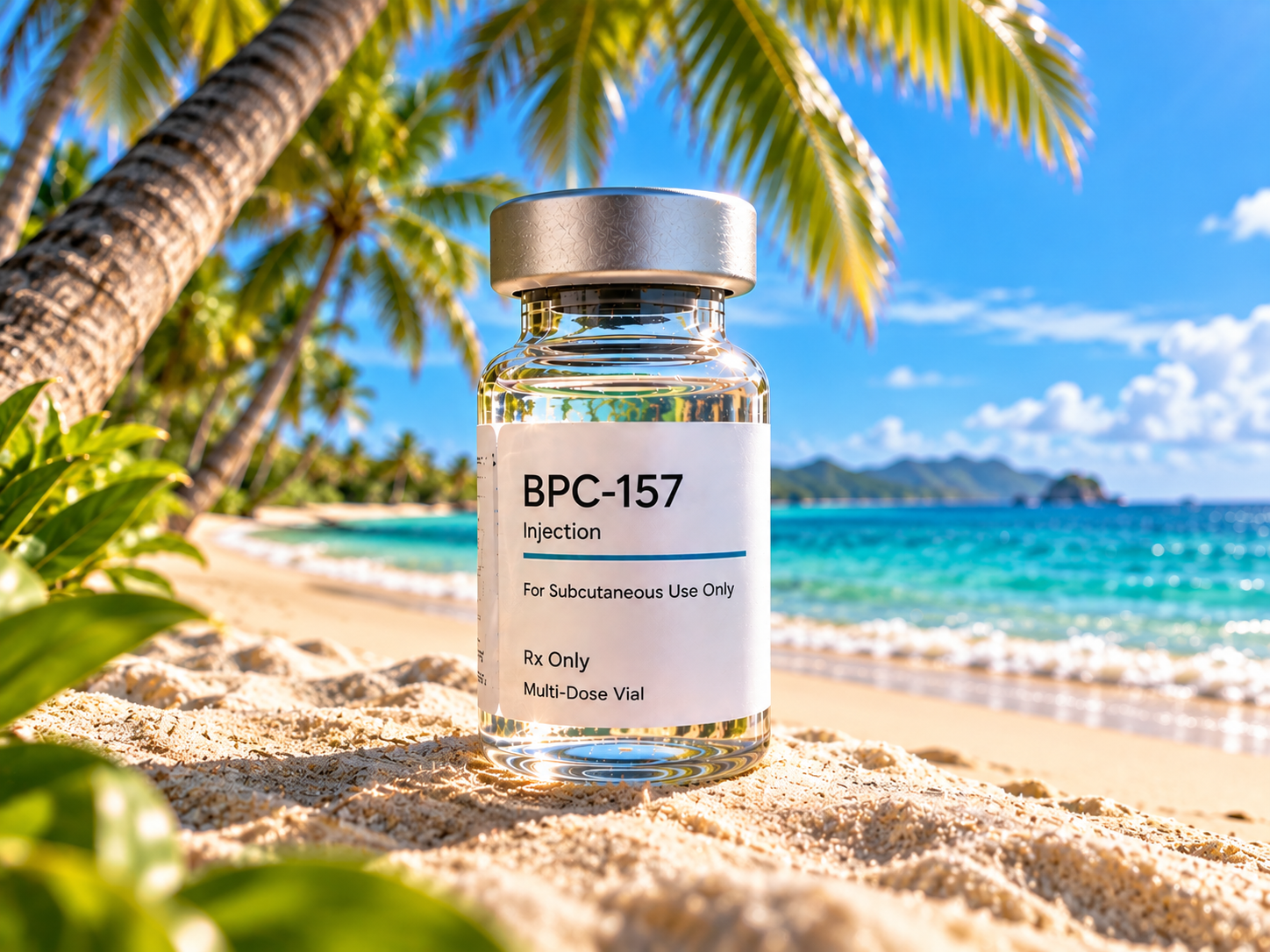
BPC stands for Body Protection Compound. BPC-157 is a synthetic fragment derived from a protective protein found in gastric juice, made up of a chain of 15 amino acids.
Researchers study how it may influence the body’s response to tissue injury, from connective tissue and muscle to the lining of the digestive tract.
How it works
Laboratory studies suggest effects on VEGF-related and nitric-oxide signaling—pathways involved in blood-vessel formation and the response to damaged tissue.
Studies have explored how BPC-157 affects repair-cell activity and collagen organization, both important to the structure of tendons and other connective tissues.
These are proposed mechanisms from preclinical research. They do not establish that a BPC-157 injection improves healing in people.
Potential benefits & research
Four areas drive interest in BPC-157. The findings below come mainly from animal and laboratory studies, rather than controlled human trials.
Animal studies have reported improved tendon and ligament healing, including better collagen organization and recovery of tissue strength after injury.
Preclinical findings—not proof of faster injury recovery in people.
Researchers have studied BPC-157 in animal models of damaged muscle, reporting improvements in repair and functional recovery.
Human muscle-recovery benefits have not been established.
Laboratory and animal research has explored protection and repair of the stomach and intestinal lining, including models of ulcers and intestinal inflammation.
Not an established treatment for ulcers, Crohn’s disease, or ulcerative colitis.
Preclinical studies suggest BPC-157 influences signaling involved in new blood-vessel growth, a process that supplies oxygen and nutrients to healing tissue.
A proposed repair mechanism—not a demonstrated clinical benefit.
Monthly care
Share your goals and medical history with an independent U.S.-licensed clinician. If care is medically appropriate and available, review your monthly options and pricing before deciding whether to subscribe.
This page is for educational purposes only and is not medical or legal advice. Animal and laboratory findings do not establish benefits in humans or guarantee personal results. BPC-157 is not FDA-approved; its human safety, effectiveness, and long-term risks are not established. FDA has identified potential immune reactions and concerns about peptide impurities. BPC-157 is prohibited under World Anti-Doping Agency rules. Consult a qualified clinician for individual guidance; any prescription depends on independent clinical judgment and availability.
Sources: Rite Aid’s BPC-157 guide · BPC-157 research review · FDA safety information.